

Piano Movers Toronto homeowners rely on exist for one reason: a piano isn’t furniture you happen to enjoy — it’s a $2,000 to $100,000+ instrument built with tolerances measured in thousandths of an inch. One rough move can detune strings, crack a soundboard, or snap the legs off a grand piano that’s stood in the same room for 40 years.
- Piano moving is a specialty service — not a job for general movers using standard furniture dollies. Upright and grand pianos require piano boards, multi-layer wrapping, and trained handling to protect internal mechanisms from vibration and impact damage.
- Costs in Toronto range from $280 to $1,200+, depending on piano type: upright (~$280–$450), baby grand ($350–$700), and full grand ($600–$1,200+). Stairs, elevator logistics, and long carries add to the base price.
- Pre-move assessment prevents moving-day surprises — your mover should inspect or video-review both locations before quoting. Condo moves require building management approval, service elevator booking (48–72 hours in advance), and often a Certificate of Insurance.
- Climate-controlled transport protects tuning stability — especially for moves over 2 hours or during Toronto’s seasonal temperature swings. Humidity and heat fluctuations can warp wood and detune strings in transit.
- Plan for professional retuning 2–4 weeks after your move. Strings need time to settle in their new environment before they’ll hold pitch reliably. Budget $150–$250 for a registered piano technician.
- Ask any mover three questions before booking: What piano-specific equipment do you use? What is your insurance coverage limit? Is your quote all-in, or are there potential surcharges for stairs, long carries, or building fees?
- Moving GPT carries up to $5,000,000 in moving insurance, among the highest coverage levels in the GTA market — and can provide a Certificate of Insurance for condo building requirements on request.
Scan this list, then read the full guide to ensure your piano arrives intact, in tune, and exactly where you want it.
Introduction
A piano isn’t just furniture you happen to enjoy — it’s a $2,000 to $100,000+ instrument built with tolerances measured in thousandths of an inch.
One rough move can detune strings, crack a soundboard, or snap the legs off a grand piano that’s stood in the same room for 40 years.
Piano moving in Toronto costs between $280 and $1,200+, depending on piano type and site complexity — but the real cost of getting it wrong is the repair bill or the heartbreak of a damaged instrument.
This guide covers everything you need to know to move your piano safely in Toronto:
- How piano-specific equipment and techniques differ from general moving
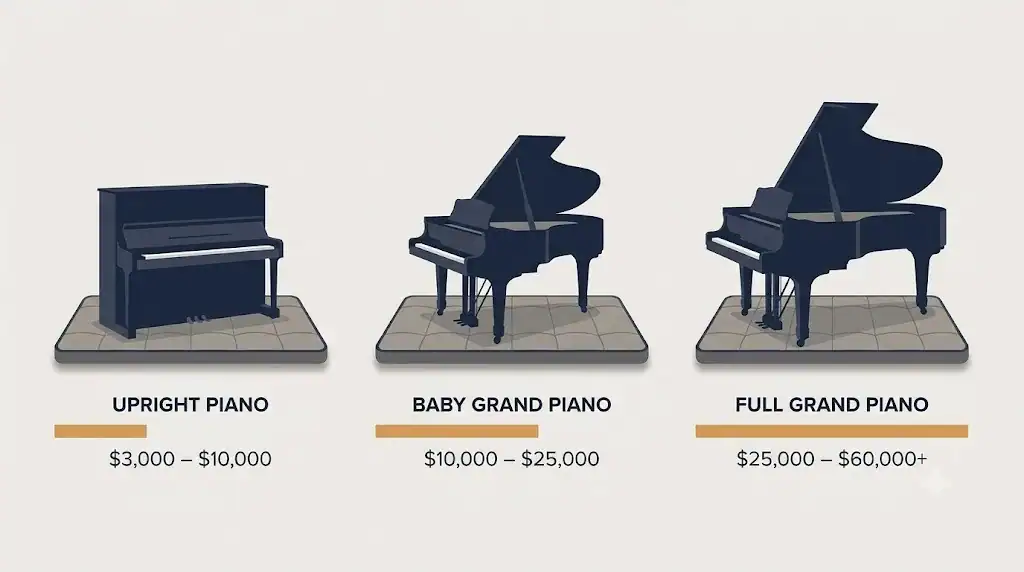
- What to expect to pay by piano type (upright, baby grand, full grand)
- How to prepare your home or condo for moving day
- The right questions to ask any mover before you hand over the keys
Moving GPT’s Specialty/High-Value Item service was built for exactly this kind of move — where precision, proper equipment, and 10+ years of experience aren’t optional, they’re the baseline.
Why Pianos Demand Specialist Movers — Not General Labor
The Structural Reality of a Piano
A piano isn’t furniture — it’s a precision instrument engineered to extremely tight tolerances, carrying 150–650 kg of weight distributed unevenly across three or four legs.
Upright pianos range from 150–500 kg. Grand pianos reach up to 650 kg — and that weight shifts dramatically the moment a piano is tilted.
Inside, thousands of moving parts — hammers, dampers, strings, the soundboard — are vibration-sensitive. A single hard jolt can detune strings or crack a soundboard worth thousands to repair.
What General Movers Get Wrong
Standard furniture dollies and moving blankets weren’t designed for piano anatomy.
Without piano-specific skid boards, the legs on a grand piano absorb the full weight of the body when tilted — and legs snap. The lyre (pedal assembly) is equally vulnerable.
Improper wrapping leaves the fallboard, keys, and lid exposed to contact damage during the sharp turns common in Toronto condo corridors.
White-glove piano handling means treating every component as its own micro-project — wrapped separately, secured precisely, placed deliberately.
Why Specialty Experience Is Non-Negotiable
Moving GPT’s Specialty/High-Value Item service was built for exactly this: instruments and belongings that general movers aren’t equipped to protect.
10+ years of high-value item handling means our team knows the difference between moving a baby grand through a Yorkville lobby and maneuvering an upright down a 1950s North York staircase.
The outcome for you: your instrument arrives intact, in tune, and in the same condition it left — not “close enough.”
Understanding Piano Moving Costs in Toronto
Cost by Piano Type
| Piano Type | Typical Weight | Toronto Price Range | Main Cost Driver |
|---|---|---|---|
| Upright | 150–500 kg | $280–$450 | Staircases, doorway clearance |
| Baby Grand | ~300–400 kg | $350–$700 | Leg and lyre removal, tight corridors |
| Full / Concert Grand | Up to 650 kg | $600–$1,200+ | Multi-floor access, long-distance logistics |
| Add-on: Tuning | — | $150–$250 | Booked 2–4 weeks after moving day |
| Add-on: Per Staircase Flight | — | $50–$150 | Number of flights, turn angles |
Piano moving costs in Toronto range from approximately $280 to $1,200+, depending primarily on instrument size and site complexity.
Here’s what to expect by piano type:
- Upright piano: $280–$450 for a standard local move in Toronto or the GTA
- Baby grand piano: $350–$700; stairs, tight corridors, and high-rise access push toward the higher end
- Full grand or concert grand: $600–$1,200+ for complex logistics, multi-floor access, or long-distance Ontario moves
What Pushes the Price Up
Several site factors significantly affect the final cost:
- Staircases: each flight adds $50–$150 in most professional quotes
- Elevator logistics: condo buildings require pre-booked service elevators, and some charge building access fees
- Long carry distance: if the truck can’t park close, a long carry adds time and crew effort
- Add-on services: tuning on arrival ($150–$250 from a registered piano technician), and climate-controlled storage (some movers include one month free)
Getting an Accurate Quote
The only reliable piano quote is one that comes after your mover has assessed both locations.
Request an in-person or video walkthrough before committing to any price. A written flat-rate quote that itemizes stairs, long carries, and building fees protects you from surprise charges on moving day.
Transparent pricing is non-negotiable — any mover who can’t commit to a written estimate after seeing the details is one to cross off your list.
The Moving GPT Piano Moving Process
Step 1: Pre-Move Assessment
Before anything moves, Moving GPT assesses both pickup and delivery locations in detail.
This means measuring doorway widths, staircase angles, and elevator dimensions — and confirming building access requirements (service elevator bookings, Certificate of Insurance for condo management).
The pre-move assessment protects your piano before it leaves the room. Surprises on moving day — a doorframe that’s 2 cm too narrow, an elevator too shallow for a grand — are avoidable with proper planning.
Step 2: Specialist Equipment and Precision Wrapping
Piano boards, not standard furniture dollies, are the correct tool for moving a piano. They distribute weight evenly and allow controlled movement in tight spaces.
Our wrapping process:
- Multi-layer padded blankets applied to keys, lid, body, and legs individually
- Fallboard locked or secured with cloth-padded tape
- Grand piano legs and lyre removed, wrapped separately, and transported in a padded compartment
- Piano body placed horizontally on a piano skid board for travel
The climate-controlled truck matters: humidity and temperature fluctuations during transport can affect tuning stability and cause wood to warp over a multi-hour move.
Step 3: Placement, Reassembly, and Final Check
At the destination, the process runs in reverse — with equal precision.
Grand pianos are reassembled: legs reattached, lyre reconnected, lid secured. The final step is a level placement check, which matters more than most clients expect: an unlevel piano affects the action mechanism and how keys respond.
We recommend scheduling professional tuning 2–4 weeks after moving day — strings need time to settle before they hold tune reliably. Your Moving GPT team can advise on registered piano technicians in your area.
How to Prepare Your Piano for Moving Day
The Day Before: What You Can Control
Preparing your piano before the movers arrive makes the job faster, safer, and protects your instrument.
Three things to do the night before:
- Remove all sheet music, accessories, and decorative items from the piano and piano bench
- Lock the fallboard (key cover) if your piano has a lock; if not, secure it with a soft cloth
- Measure your doorframe widths, hallway width, and any staircase clearance — and share these measurements with your mover in advance
This isn’t just helpful — it’s the kind of detail that separates a smooth move from a day of expensive problem-solving.
Condo and High-Rise Prep
Condo moves add one critical task: booking the service elevator.
Book 48–72 hours in advance through your building’s concierge or property management. Most GTA condo buildings also require a Certificate of Insurance (COI) from your mover before they’ll approve elevator access.
Moving GPT’s $5,000,000 insurance coverage means a COI can be arranged on request — a process our team handles routinely across Toronto, Etobicoke, North York, Scarborough, and Mississauga.
For Long-Distance Ontario Moves
Long-distance piano transport — anywhere beyond the GTA — makes climate-controlled trucks non-negotiable.
Temperature swings of more than 10°C over a 2–3 hour drive can cause wood components to expand and contract, throwing tuning and potentially cracking older soundboards.
Budget $150–$250 for professional tuning 2–4 weeks after the move. Strings need time to adapt to their new environment before they’ll hold pitch reliably.
Questions to Ask Any Piano Mover Before You Book
Experience and Specialization
Not every mover who says “yes” to a piano is actually equipped to handle one safely.
Start with direct questions about experience:
- “How many pianos have you moved in the past year?”
- “Do you specialize in upright pianos, grand pianos, or both?”
- “Have you moved pianos through condo buildings in Toronto or the GTA?”
The answers reveal more than a Google review can. A mover who hesitates on equipment specifics or can’t name the piano boards and blanket types they use is one to reconsider.
Insurance and Pricing Transparency
Two non-negotiable questions:
- “What does your insurance cover if my piano is damaged — and what’s the coverage limit?”
- “Is this quote all-in, or are there additional charges for stairs, long carries, or building fees?”
Moving GPT carries up to $5,000,000 in moving insurance — among the highest coverage levels in the GTA moving market. Ask any mover for their coverage documentation before signing.
Red Flags That Should End the Conversation
Some responses disqualify a mover immediately:
- They quote a price without seeing the piano, the pickup location, or the delivery location
- They can’t provide written insurance documentation on request
- The estimate is verbal only — no written breakdown of potential surcharges
- They use general furniture dollies rather than piano-specific equipment
Your piano represents a significant financial and sentimental investment. The right mover treats it that way from the first call.
Conclusion
Moving a piano safely in Toronto requires more than a strong back and a standard moving truck — it demands specialist equipment, white-glove handling, and an experienced team that understands the unique structural vulnerabilities of your instrument.
Whether you’re moving an upright across town or relocating a grand piano to a new home in Mississauga, the principles are the same: assess the route, wrap every component individually, use proper piano boards, and plan for retuning on the other side.
Three actions to take today:
- Get a written flat-rate quote that itemizes stairs, elevator access, and any long-carry charges — never accept a verbal estimate for a piano move
- Ask your mover directly about their insurance coverage limit and request a COI if your building requires one
- Book early: peak moving season in Toronto runs April through September, and the best specialty movers fill up fast
At Moving GPT, piano moves are part of our Specialty/High-Value Item service — the same white-glove standard we apply to antiques, designer furniture, and corporate office relocations.
Your piano deserves the same level of care as the room it’s going into. Get in touch with Moving GPT for a free, transparent quote — and move with confidence.
FAQ
- How much do piano movers in Toronto charge?
Piano Movers Toronto rates typically run from $280 to $1,200 or more. An upright usually falls between $280 and $450, a baby grand between $350 and $700, and a full or concert grand between $600 and $1,200+. Stairs, service elevator logistics, and long carries are added on top of the base rate, which is why a written flat-rate quote matters. - Can regular movers move a piano, or do I need a specialist?
Regular movers rarely carry the right gear, which is why Piano Movers Toronto specialists exist. Standard furniture dollies and blankets aren’t built for piano anatomy — without a proper skid board, a tilted grand puts its full body weight onto legs that are designed to snap under that load. The lyre, fallboard, and soundboard are equally vulnerable. - Does my piano need to be tuned after it’s moved?
Yes. Piano Movers Toronto teams recommend scheduling professional tuning 2–4 weeks after moving day rather than immediately. Strings need time to settle into the humidity and temperature of the new room before they’ll hold pitch reliably. Budget $150–$250 for a registered piano technician. - What do I need to arrange before a condo piano move?
Condo buildings add two requirements that Piano Movers Toronto crews handle routinely: booking the service elevator 48–72 hours ahead through your concierge or property manager, and supplying a Certificate of Insurance to building management. Confirm both before your booked date so elevator access isn’t refused on arrival. - How do I know a piano mover is actually qualified?
Ask three questions before you hire any Piano Movers Toronto company: what piano-specific equipment they use, what their insurance coverage limit is, and whether the quote is all-in. Walk away from anyone who prices the job without seeing both locations, won’t provide written insurance documentation, or gives a verbal-only estimate.