

Packing and moving services cost can range from $300 for a studio apartment to $18,000+ for a cross-country move—but understanding the pricing breakdown, hidden fees, and timing strategies puts you in control. This concise guide uncovers the essential facts, pricing trends, and smart strategies to ensure your next relocation is efficient, tech-powered, and budget-friendly. Below, find the most actionable insights—each formatted for quick scanning, instant comprehension, and practical use.
- Transparent, tech-driven quotes are the new standard—snap photos in an app to receive a precise, digital estimate in seconds, with real-time dashboards and live tracking making every stage of your move stress-free.
- Local move costs start at $800–$2,500 for 2–3 bedrooms—expect hourly rates of $108–$135 for two movers, plus a minimum of 2–3 hours and travel, while full-service or complex jobs drive rates higher.
- Long-distance moves range from $2,500–$7,000+ for 1,000 miles—final quote depends on distance, size of your home, and seasonality, with pricing by weight ($0.50–$0.70/lb) or volume now common.
- Professional packing services cost $1,000–$2,000 for an average home—save hundreds by self-packing basic items and sourcing your own boxes, while leaving fragile or high-value items to the pros.
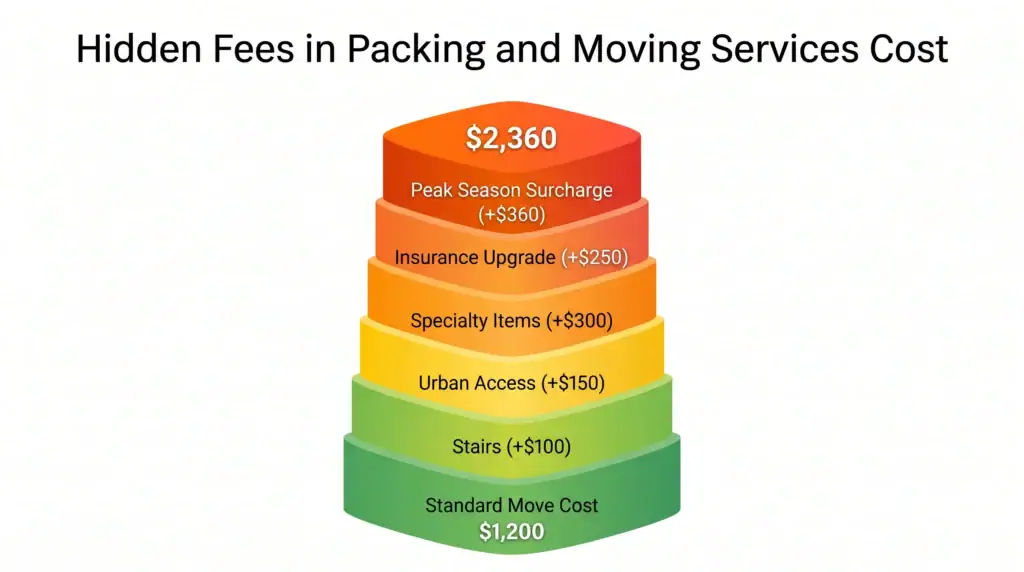
- Watch for add-on charges like stairs, elevators, or urban access fees, which can add $50–$500+ per service—plus peak-season surcharges of up to 30% during busy summer or holiday periods.
- Smart tech enables easy comparison shopping—always collect at least 3–4 instant, written quotes using digital platforms, and ask for binding or “not-to-exceed” pricing to prevent surprises.
- Adjust your moving date to mid-week or off-peak for 10–20% savings—and book 6–8 weeks in advance for the best availability and lower rates.
- Set aside an extra 10–15% buffer for hidden costs and insurance upgrades, ensuring transparency and a truly zero-stress moving experience.
Plan early, compare digital estimates, and lean into tech-powered tools—ensure your 2026 move is clear, predictable, and custom-fit to your life. Tap into the full article for pro strategies, price guides, and real-world scenarios that guarantee a smarter move.
How Moving in 2026 Works: Your Complete Packing and Moving Services Cost Guide
Imagine this: You open an app, snap a few photos of your living room, and in less than two minutes—you know exactly what your move will cost, down to the last box and hour.
That’s how relocation works in 2026. No more vague “ballpark” quotes. No endless phone calls or hidden fees. Instead, you get instant, transparent pricing, digital dashboards, and professional teams who use technology to make every step smoother.
But predictable pricing is only half the story. The real challenge? Figuring out which moving service best fits your timeline, your budget, and your stress tolerance—especially with options that range from full-service white-glove crews to DIY truck rentals. Today’s movers are competing for your peace of mind, offering:
- Smart, AI-powered estimates that take the guesswork out of planning
- Professional support for everything from fragile packing to logistics
- Flexible service packages that put you in control—choose only what you need
It’s never been easier to schedule, monitor, and manage your move—whether you’re crossing town or starting fresh across the country.
But costs can still run the gamut. With average local moves hovering between $800–$2,500, and long-distance jobs climbing to $18,000+, knowing what impacts your final price is key to avoiding surprises and keeping your move truly stress-free.
You want the confidence to budget accurately—and the freedom to tailor services so moving feels simple, not overwhelming.
Here’s what you’ll find next: A real-world look at the current moving landscape, cost ranges for every scenario, transparent pricing breakdowns, and the smartest strategies for staying in control—so you can focus on settling in, not sorting out invoices.
Ready to see how moving in 2026 is finally working for you? Let’s explore what you can expect, and how to make your next move the smoothest yet.

Understanding Packing and Moving Services Cost in 2026
The 2026 Moving Landscape: Quick Options at a Glance
In 2026, moving services are all about simplicity, convenience, and transparency—with tech enhancing every step.
You’ll typically choose from three main options:
- Full-service moves: Movers handle everything, from packing your entire home to loading, transport, and unpacking.
- Partial-service: You pack some items, pros handle the rest—ideal for specific rooms or fragile items.
- DIY moving: You rent a truck or container, do the heavy lifting, and manage your move end-to-end.
On moving day, professional movers and packers work efficiently, using digital checklists and barcode tracking to keep your belongings organized and secure.
“Moving in 2026 means more control, less confusion. You decide how much help you want—no surprises.”
Smart Technology and Transparent Pricing
Picture this: You open an app, snap photos of your rooms, and get a precise price in seconds.
Most top services now offer:
- Instant digital quotes: AI engines factor in inventory, access, timing, and distance.
- Online booking and dashboards: Track your estimate, schedule, and moving checklist, all from your phone.
- Real-time communication: Live chat, push updates about crew arrival, and clear digital contracts.
This digital-first approach ensures estimates are detailed, accurate, and easy to compare.
Why Service Level and Experience Matter
Premium movers set themselves apart through:
- Reliability: On-time arrivals using smart route optimization.
- Professionalism: Uniformed crews, labeled boxes, and protected surfaces.
- Customer-first support: Proactive updates, calm guidance, and tailored solutions for unique items.
These features translate to a truly stress-free move—the kind you’d recommend to friends.
“Premium moving isn’t just about price. It’s about a smoother experience, end-to-end reliability, and a calm, guided process from start to finish.”
What Makes a Modern Move Effortless
Choosing the right service means weighing:
- How much help you want vs. budget
- The importance of upfront, predictable costs
- Your need for speed, safety, and digital guidance
The best moving companies in 2026 spotlight clarity, speed, and care. You’ll see real-time price estimates, easy rebooking, and expert crews—so even a complex relocation can feel simple.
Moving now feels organized from the first click to final delivery. Look for providers who make every step seamless—because your move should fit your pace, your schedule, and your life.
Typical Cost Ranges and Pricing Models
| Move Type | Distance | Average Cost Range | Hourly Rate | Key Factor |
|---|---|---|---|---|
| Local Studio/1BR | Under 50 miles | $300-$900 | $108-$135 | 2-3 hour minimum |
| Local 2-3BR | Under 50 miles | $800-$2,500 | $108-$135 | Complexity, stairs |
| Long-Distance 2-3BR | 1,000 miles | $2,500-$7,000 | $0.50-$0.70/lb | Weight/volume |
| Full-Service Cross-Country | 1,500-2,500 miles | $8,000-$18,000+ | Volume-based | Packing included |
Local Moves (Under 50 Miles)
If you’re planning a local move in 2026, expect transparent pricing and clear rates up front.
For a standard 2–3 bedroom home, the average total cost falls between $800–$2,500, based on the latest 2026 moving service reports.
Hourly rates are typically $108–$135 for two movers and a truck.
Most movers apply a 2–3 hour minimum plus 1 travel hour—even if your move is short, this means a small, same-city job generally starts at $300–$700+.
-
- Picture this: Booking a three-hour move at $125/hour for a 2-bedroom apartment. Base cost? $375 plus travel: easy to predict, easy to budget.
-
- Larger groups or full-service jobs (more packing, complex access) can push hourly rates to $180–$225 for 3–4 movers.
“In 2026, every local move starts with speed and clarity—hourly rates, flat minimums, and tech-powered estimates put real numbers in your hands from the start.”
Long-Distance and Cross-Country Moves (50+ Miles)
Costs scale quickly with distance.
A 2–3 bedroom move (1,000 miles) averages $2,500–$7,000+, while full-service, cross-country (1,500–2,500 miles) jumps to $8,000–$18,000+.
Two main pricing models dominate:
-
- Weight-based: $0.50–$0.70 per pound—e.g., a 6,000 lb load over 1,000 miles is roughly $3,000–$4,200.
-
- Volume-based: Calculated by cubic feet; sample: 2-bedroom from Florida to NY/NJ costs $3,500–$5,500 in 2026.
Popular routes (e.g., Sun Belt moves) often see dynamic pricing due to high demand and longer distances, which also raises per-job revenue for service providers.
Quotable tip: “Use mileage and inventory as your compass—distance and home size are the two levers that determine your final cost.”
How Movers Calculate Your Quote
Modern moving quotes in 2026 are smart, transparent, and fast—powered by digital tools that factor every detail.
Your quote is shaped by:
-
- Home size and volume: 2-bedroom vs 4-bedroom makes a $1,000s difference.
-
- Inventory detail: The more precise your item list, the fewer surprise charges you’ll face.
-
- Access challenges: Stairs, long walks, or elevator use add surcharges.
-
- Service level: Full-service (packing, handling special items) versus load-only impacts price.
Picture the instant estimate: Enter your address, home size, stairs, and special items—within seconds, you get a digital, binding quote that’s clear and actionable.
Memorable takeaway: “In 2026, instant estimates mean more control and zero surprise fees—your quote is now a living roadmap, not just a number.”
You’ll find it easier than ever to budget your next move when you understand the core pricing levers—distance, complexity, and how much you want done for you. Use these numbers as your foundation, then add or subtract based on your unique needs for a stress-free move.
Packing Services and Materials Cost Breakdown
Packing and Moving Services Cost: Complete Guide-Professional Packing Labor
Investing in professional packing gives you time back and protects your belongings, especially when tackling an entire household.
Services typically include:
-
- Kitchenware and dishes packed with premium materials
-
- Fragile glassware, art, and electronics handled by trained packers
-
- Full home contents organized, inventoried, and boxed for you
Expect to pay $1,000–$2,000 for packing a standard 2,000 sq ft home in 2026, covering labor and most supplies.
Hourly rates run $40–$60 per packer—it usually takes 2–3 packers about 6–8 hours for a typical move.
For busy families and professionals, “Let the pros pack up the kitchen and you handle the closets” is now a common, cost-saving hybrid.
“Smart packing means less stress and fewer surprises on moving day—focus on what matters most, leave the rest to the experts.”
Materials and Supplies
Boxes and specialty containers add up fast with full-service moves.
The essentials include:
-
- Standard moving boxes: $3–$5 each
-
- Wardrobe boxes for clothes you want to hang: $20–$40 each
-
- Dish packs for fragile glassware: $10–$25 per box
-
- Mattress boxes, art crates, mirror cartons for special items
-
- Packing tape: $7–$10 per roll
Material markups by movers can reach 50–100% above retail, especially for specialty containers and premium tape.
Buying your own supplies from home stores or online can significantly lower your moving budget.
“Choosing between DIY and pro packing is a balance: save money on materials yourself, invest in professional handling for your most valuable or delicate items.”
Strategies to Reduce Packing Expenses
Here’s how to keep packing costs in check, without sacrificing care:
-
- Source your own boxes, tape, and wrapping at local shops or online
-
- Pack less-valuable items yourself, saving pros for the kitchen, glassware, and art
-
- Request partial packing—pay only for what you need
-
- Donate, sell, or recycle items you no longer want before moving
A real-world example: Packing your own books and clothes, while letting packers handle china and electronics, can save $400–$1,000 on an average family move.
“Pack smart: every box you fill yourself is extra room in your moving budget.”
Professional packing is about flexibility—choose what makes your move easier and stick to only the services that deliver real peace of mind. For most, a mix of self-packing and pro support leads to the safest, most affordable result.
Add-On Charges and Hidden Fees: What to Watch For
Common Additional Charges
Before you finalize your moving budget, it’s crucial to plan for add-on charges that can quickly impact your total cost.
Most movers list the following as separate line items:
-
- Stairs or elevators: Expect a fee for each flight or elevator trip, often $50–$200 per level.
-
- Long carries: Extra charges if movers must haul belongings more than 75 feet from truck to door.
-
- Specialty item handling: Bulky items like pianos, safes, or oversized appliances may add $150–$500+ each.
-
- Access restrictions: If your building requires parking permits or a shuttle van due to tight urban layouts, fees typically range from $100–$400.
-
- Storage needs: Temporary “in-transit” storage averages $100–$300/month, while long-term vaulting can vary by size and city.
A single “difficult access” job can add several hundred dollars—picture this: a three-story walk-up move on a busy street, with a piano and no close parking, may trigger up to $1,000 in fees.
Real quote: “Many moves show a jaw-dropping increase only after these extras are applied.”
Seasonal and Geographic Surcharges
Moving during peak demand periods changes everything:
-
- Summer, weekends, and holidays drive rates up by as much as 20–30%.
-
- Fast-growing cities (think Toronto or Austin) often charge urban access or congestion fees adding $150–$300.
Some companies publish a “peak season surcharge” upfront, while others only disclose after initial quote.
When planning, always ask:
-
- “What seasonal or city-specific surcharges could affect my final invoice?”
Insurance and Liability Upgrades
Basic pricing usually covers only minimal carrier liability (often $0.60 per pound per article), which won’t replace high-value items.
Explore your options:
-
- Full-value protection: Reimburses the repair or replacement cost, typically for 1–2% of total move value (e.g., $200–$500 on a $25,000 load).
-
- Third-party insurance: May be necessary for antiques, electronics, or collectibles.
Smart quote: “The gap between what’s ‘included’ and what’s ‘protected’ can cost you thousands if you’re underinsured.”
What This Means for Your Move
Hidden moving costs aren’t really hidden—if you know where to look.
Always build in a buffer for access fees, specialty items, and insurance upgrades when comparing quotes.
Clear, up-front questions can save you from last-minute sticker shock and ensure your move is as predictable as possible.
Key Market and Pricing Trends Shaping 2026 Costs
Growth and Industry Evolution
The global moving services market hits $117.4 billion in 2026, with projections showing continued growth through 2033.
Steady demand is keeping companies busy, while fuel, labor, and insurance costs are quietly nudging prices upward by 3–6% year-over-year.
Picture this: Movers are busier than ever, and keeping a fleet running now costs more—expect average move prices to be slightly higher than in 2025.
“In 2026, transparent pricing isn’t optional, it’s expected.”
—
Regional Patterns and Shifting Demand
-
- Sun Belt states such as Texas, Florida, and Arizona see a surge in moves, with companies adding new routes to match.
-
- North America holds a 42.3% share of the global market, while the Asia-Pacific is leading growth rates.
-
- Corporate relocations and hybrid-work moves now account for a larger slice of long-distance and specialized service demand.
You’ll notice that moving costs can swing significantly based on where you’re headed, the season, and unique local factors.
—
Technology and Digital Transformation
-
- AI-powered quoting and mover-matching platforms deliver real-time, instant online estimates.
-
- Digital contracts and remote inventory walkthroughs are now standard, often replacing in-person consultations.
-
- Smart tech gives you clearer quotes—fewer surprises, more confidence.
“Digital dashboards and transparent estimates have changed the game for planning a move.” Imagine seeing an instant cost breakdown and locking it in with a click.
—
Impact of Corporate and Hybrid-Work Relocations
-
- Businesses now expect white-glove, tech-enabled, fully managed moves, complete with real-time tracking and cost transparency.
-
- Volume discounts, Service Level Agreements (SLAs), and end-to-end relocation plans are becoming table stakes.
-
- These B2B innovations often translate to trickle-down perks—better technology, availability, and service options for individuals.
“Premium service isn’t just for companies—consumers now enjoy the same tech-powered ease.”
—
Moving in 2026 is defined by smarter technology, clearer pricing, and a relentless focus on customer experience. The takeaway? Plan early, leverage digital tools, and expect service that’s transparent and tailored to your needs—whether you’re relocating across town or across the country.
Cost Scenarios: Practical Benchmarks for Common Moves
Local, Small Apartment or Studio Moves
If you’re moving a studio or 1-bedroom within the same city, expect total costs in the $300–$900+ range.
This scenario usually means DIY packing and just a few hours of moving labor.
-
- Most companies require a 2–3 hour minimum plus 1 hour for travel, so small moves start near $300, even if the job is quick.
-
- Hourly rates for 2 movers and a truck: typically $108–$135 in 2026, depending on your city.
Picture this: Movers arrive with a clean, branded truck, efficiently load your labeled boxes, and you unlock your new front door—unpacking by lunchtime.
“A smart schedule and light packing keeps your in-town studio move under $1,000—often well under.”
—
Local Move: Typical Family Home (2–3 Bedrooms)
For a standard 2–3 bedroom local move, most families see all-inclusive prices between $800 and $2,500.
Costs shift with:
-
- Local labor rates: higher in major metro areas
-
- Job complexity: stairs, elevator, or parking challenges
-
- Special items/add-ons: like a piano or extra packing help
You’ll usually pack your own boxes, with professionals handling all lifting and transport.
“Know your home’s details—like stairs and parking—so your quote stays crystal clear and stress-free.”
—
Long-Distance and Cross-Country Moves
Planning a move over 50 miles? Long-distance move costs jump quickly.
-
- 2–3 bedroom, 1,000-mile moves generally range from $2,500–$7,000+.
-
- 3-bedroom, full-service cross-country (over 1,000 miles) often hits $8,000–$18,000+.
Key price swings come from:
-
- Total weight/volume of belongings
-
- Seasonal demand and route popularity
-
- Extras like packing services, storage, or insurance
Imagine scanning a detailed, instant estimate on your phone—no surprises when your items arrive in another province or state.
“Price swing? It’s real: high season or a full pack can add thousands fast—compare quotes before booking.”
—
Special Circumstances: Unique Moves & Custom Requests
Have a grand piano, extra-large home, or remote destination? Expect premium pricing.
-
- Access issues, last-minute moves, or specialty handling may push your quote higher by $500–$3,000+.
-
- Custom needs mean pricing by case, not formula—always request specifics up front.
Visualize movers carefully crating artwork, or a box truck climbing winding roads to your secluded cabin—these are add-ons that show up in the final bill.
“Customized moves come with custom prices—clarify every special detail when requesting your quote.”
—
Before you click ‘book,’ use these 2026 realistic cost targets as your baseline. Accurate info about your home size, packing level, and timing makes instant digital quotes work for—not against—you, ensuring your next move is truly stress-free.
Smart Strategies for Getting Transparent, Competitive Pricing in 2026
Timing and Flexibility
When you move is as important as how you move.
Shifting your move to mid-month, weekdays, or off-peak seasons can slash average moving costs by 10–20% compared to peak weekends or summer months.
Booking 6–8 weeks in advance is the sweet spot for the best rates and availability—last-minute bookings may add hundreds to your total.
“Booking a midweek, mid-month move is often the easiest way to save big—especially for local jobs under 50 miles.”
—
Comparing and Evaluating Quotes
Don’t settle for the first estimate.
-
- Request at least 3–4 digital quotes from reputable platforms, using instant estimate tools that are now standard in 2026.
-
- Always ask for binding or “not-to-exceed” quotes to avoid price hikes on move day.
-
- Share detailed, accurate inventories—listing specifics like stairs, elevators, or special items—to keep quotes honest and transparent.
A clear, written inventory is your best defense against surprise fees.
“The more details you provide up front, the fewer surprises you’ll face later—simple digital inventories make this easy.”
—
Choosing the Right Service Level
Customize your move for comfort and value.
-
- Consider full-service for maximum convenience, or save by packing boxes and leaving only larger items for the pros.
-
- Use a quick checklist:
-
- Budget tight? DIY or partial service.
-
- Tight on time? Full-service may be worth the premium.
-
- Worried about fragile items? Outsource breakables and heavy lifting.
Assigning specific tasks to movers, while handling simple packing yourself, keeps both cost and stress down.
—
Using Technology and Moving Tools
Leverage 2026’s tech advances.
-
- Use online dashboards and dedicated apps for real-time quote tracking, instant payments, and contactless inventory updates.
-
- Popular platforms provide transparent cost breakdowns, updated in seconds as you refine your move details.
-
- Trusted price calculators (from Allied, North American, Safebound, and others) now standardize fees and flag likely add-ons—so you’re never in the dark.
—
Final Budgeting Tips
Plan for hidden extras.
-
- Set aside 10–15% of your final quote as a buffer for unexpected fees or changes.
-
- Watch for red flags like unclear pricing, vague estimates, or aggressive upselling—these can signal hidden costs ahead.
-
- Double-check customer reviews and third-party ratings to ensure your mover is reliable, transparent, and consistently delivers on promises.
“A trustworthy quote, transparent process, and responsive technology mean zero surprises on moving day.”
—
The smartest way to get the best moving deal in 2026? Compare written, binding digital estimates early, stay flexible with your moving date, and use tech-enabled tools to manage every step—ensuring costs stay predictable and your move feels perfectly under control.
Take Control of Your 2026 Move: Smart Planning Ensures Predictable Packing and Moving Services Cost
Navigating your move in 2026 is all about confidence, clarity, and ease. With technology on your side and pricing more transparent than ever, moving no longer has to be a source of stress—it’s an opportunity to start fresh with total control over your experience.
You’re empowered to make smart, informed choices that match your lifestyle and budget—so you can focus on what matters most, not on hidden fees or last-minute surprises.
—
Here’s how you can move smarter and stress-free:
-
- Compare at least 3–4 digital, binding estimates for true pricing confidence.
-
- Schedule your move for a mid-month, midweek date—and save up to 20% over high-demand periods.
-
- Customize your service level: combine pro packing for fragile items with DIY where it makes sense.
-
- Track every detail using moving apps and online dashboards for real-time clarity and control.
-
- Budget an extra 10–15% as a cushion for add-ons and unplanned needs.
—
Ready to take action?
-
- Get instant digital quotes today from trusted providers—start with a clear inventory list and accurate details.
-
- Ask direct, upfront questions about seasonal surcharges, access fees, and insurance before you book.
-
- Book early and lock in your move date for the best rates and widest choice of times.
-
- Download a moving app to manage checklists, track estimates, and stay connected every step of the way.
—
Your next move isn’t just possible—it’s predictable, organized, and entirely in your hands.
Stress-free moving begins with clarity, not chance. Take the first step today, and discover how seamless your relocation can be when you put technology and transparency to work for you.
“Move smart, move confidently—because a new chapter should always start with peace of mind.”
FAQ
- What is the average packing and moving services cost for a local move in 2026?
For a standard 2-3 bedroom local move, packing and moving services cost typically ranges from $800-$2,500. Hourly rates for two movers are $108-$135, with most companies charging a 2-3 hour minimum. Understanding these packing and moving services cost factors helps you budget accurately and avoid surprises. - How much does professional packing add to packing and moving services cost?
Professional packing and moving services cost an additional $1,000-$2,000 for a standard home, covering labor ($40-$60 per packer) plus materials. By self-packing non-fragile items while letting pros handle delicate belongings, you can significantly reduce your packing and moving services cost while maintaining protection for valuables. - What hidden fees should I expect when calculating total packing and moving services cost?
Beyond base packing and moving services cost, watch for stairs ($50-$200 per level), long carries, specialty item handling ($150-$500+), and urban access fees ($100-$400). These add-ons can increase your packing and moving services cost by hundreds of dollars, so ask about them when getting quotes. - How can I reduce my packing and moving services cost by 10-20%?
The best way to lower packing and moving services cost is booking a mid-week or mid-month move instead of peak season, and scheduling 6-8 weeks in advance. These timing strategies combined with partial self-packing can reduce your packing and moving services cost by 10-20% compared to peak-season rates. - How should I budget for unexpected costs when planning packing and moving services cost?
Set aside 10-15% of your total packing and moving services cost estimate as a buffer for unexpected fees, insurance upgrades, or last-minute changes. This ensures you have a true picture of your total relocation expenses and eliminates stress from hidden surprises on moving day.