

Items will movers not transport is the first thing every Canadian should know before planning a move in 2026. Use these fast, actionable insights to help you pack smarter, stay compliant, and ensure a stress-free, surprise-free moving day.
- Movers enforce strict “non-allowables” lists to comply with safety, legal, and insurance rules—over 95% of reputable companies now distribute these lists digitally when you request a quote.
- Hazardous materials and chemicals—think fuel, paints, aerosols, and large batteries—are universally banned due to the risk of fire, explosion, and costly regulatory fines; always dispose of these items safely before your move.
- Perishable foods, live animals, and all plants are refused by nearly all moving companies, especially for long-distance and cross-border moves, because of contamination, pest risk, and agricultural laws.
- Firearms, ammunition, and weapons require special handling or are outright prohibited—never pack loaded guns or ammo, and always get rules in writing to avoid police intervention or move-day delays.
- Valuables and essentials—such as cash, jewelry, heirlooms, and critical documents—must travel with you; over 76% of moving losses are tied to these items mistakenly packed with household goods.
- Specialty and oversized items like pianos, gun safes, hot tubs, and large aquariums may be refused or require extra fees and specialized movers; always get written confirmation about what your mover can handle.
- Military/PCS and government moves have even stricter “do not pack” lists—including vehicles, business goods, and bulk materials—so confirm all bans with your move coordinator early.
- Use a digital checklist and sort belongings early into “keep-with-you,” “donate/dispose,” and “safe for movers” so you can avoid last-minute chaos and costly mistakes.
A clear understanding of prohibited items lets you move with confidence, avoid unexpected setbacks, and enjoy a truly stress-free relocation—explore the full guide for expert tips and the latest checklists.
Items Will Movers Not Transport — What Every Canadian Must Know Before Packing a Single Box
Did you know that over one in four Canadian moves hit a snag because something unexpected turns up on the movers’ “do not pack” list? Imagine the frustration: your carefully packed boxes are ready, but essential items have to stay behind—sometimes at the very last minute.
If you’re getting ready for a local or long-distance move, knowing exactly what movers won’t transport isn’t just a checklist item—it’s the key to a truly stress-free move.
The good news? Modern moving services offer clear digital tools, guided support, and detailed “non-allowables” lists right at your fingertips. But as new regulations and technologies shape the industry in 2026, the ground rules have shifted:
- Safety standards are more rigorous than ever, thanks to stricter provincial and federal rules
- Digital inventory systems make it easier to verify your mover’s banned-items list on-demand
- Insurance and liability coverage mean both you and your movers have to play by the book
Whether you’re moving condos, family homes, or student apartments, avoiding common slip-ups—like packing hazardous materials, perishables, or valuables—is the fastest way to save time, money, and hassle.
Here’s what you’ll gain from this guide:
- See exactly which items moving companies refuse to touch—from hazardous chemicals to family heirlooms
- Get a rundown of how new rules in 2026 affect everything from batteries to overstuffed pianos
- Pick up practical tips for sorting, self-packing, and using tech to simplify every step
- Learn when and why some items demand extra planning or specialty help
In an era of smarter moves and digital-first support, understanding these hard lines gives you total control over your next move—and keeps surprises at the door.
Ready to make your move as seamless as possible? In the next section, we’ll break down the latest moving company regulations so you can pack with confidence—and no last-minute stress.

Understanding Moving Company Regulations in 2026
Moving in 2026 means navigating one of the clearest regulatory landscapes Canada’s relocation industry has ever seen. Every major van line must follow extensive rules defining which items are allowed on moving trucks—and which must stay behind.
For every move, you’ll encounter a “non-allowables” list: the official catalog of items your movers refuse to haul. This isn’t just red tape—these rules keep moves safe, prevent accidents, and set clear legal lines for everyone involved.
Pro tip: Over 95% of reputable movers now provide these lists digitally as soon as you request a quote, making prep easier than ever.
—
Why Moving Companies Restrict Certain Items
Picture this: a forgotten pool chemical leaks inside a moving truck, ruining not only your furniture but everything else packed alongside it.
Companies block specific objects for reasons including:
- Safety risks: explosion, fire, chemical burn, or toxic contamination
- Strict environmental and transport laws: hefty fines and license risk for non-compliance
- Insurance restrictions: most policies won’t cover moves if banned objects are included
Moving companies protect:
- Their workers
- Your belongings
- Other customers’ items
- The public and local environment
Quotable: “If a mover won’t carry it, there’s almost always a safety, legal, or insurance reason.”
—
How to Identify Your Mover’s “Do Not Move” List
Not every non-allowables list looks identical. Get the facts before you pack:
- Check for official lists online (company websites, industry-association portals)
- Demand a written, up-to-date policy from your mover at the quote or contract stage
- Review documents digitally or as part of your moving app experience
Standard bans (like hazardous chemicals or perishables) apply industry-wide, but company-specific restrictions—like refusing all liquids or certain collectibles—can vary.
Always:
- Double-check the prohibited items list before signing, especially for specialty items, plants, or anything battery-powered
- Contact your move coordinator for clarification—they’re trained to answer even the “Is this safe to move?” gray areas
Memorable tip: “Asking for a current do-not-move list protects you—and your move—against surprise setbacks.”
—
Clear moving regulations in 2026 mean fewer surprises and smoother moves. Request every policy in writing, sort your items early, and use your company’s list as your ultimate packing guide for a trouble-free moving day.
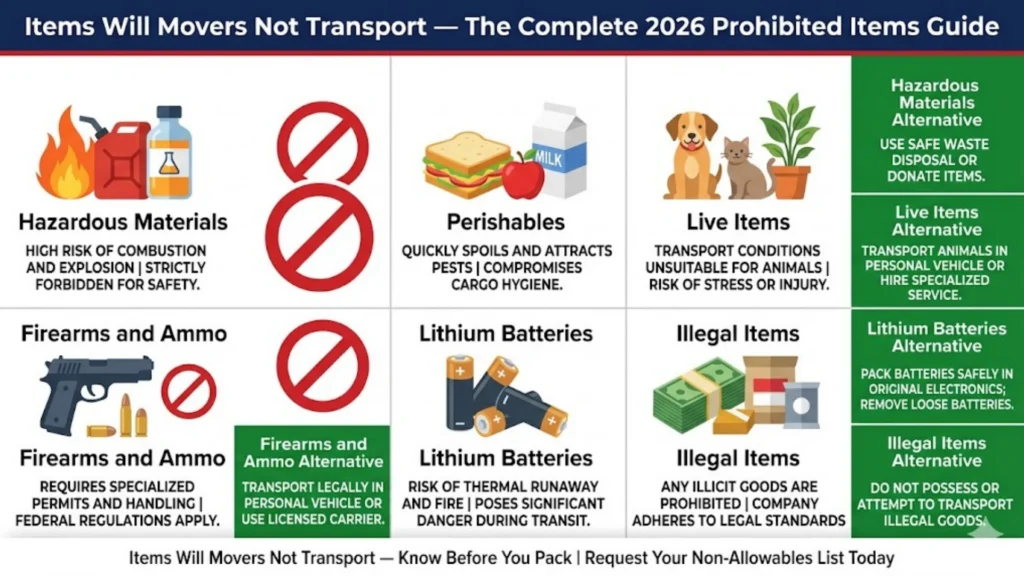
Strategic Overview of Prohibited Items
Picture this: You’re packing up for a 2026 move and want zero surprises on moving day. Nearly all Canadian moving companies will refuse certain items—no exceptions. These core bans are tied to both safety regulations and industry standards, and they’re universal across most local, long-distance, and international relocations.
If you only remember three things, let them be these:
- Hazardous materials
- Perishable or live items
- Anything illegal or extremely high-risk
Staying ahead of these rules is the fastest way to a smooth, stress-free move.
| Category | Examples | Why Banned | Safe Alternative |
|---|---|---|---|
| Hazardous Materials | Fuels, paints, aerosols, pesticides | Fire, explosion, toxic contamination | City hazardous waste drop-off |
| Perishables | Fresh food, frozen items, open containers | Spoilage, pest infestation, contamination | Consume, donate, or discard |
| Live Items | Animals, plants | Agricultural laws, pest risk | Transport personally or rehome |
| Firearms & Ammo | Loaded guns, gunpowder, certain knives | Legal liability, safety risk | Transport personally with documentation |
| Lithium Batteries | E-bikes, scooters, large battery packs | Fire hazard, 2026 regulations | Remove, approved containers, ship separately |
| Illegal Items | Drugs, stolen property, contraband | Criminal liability | Never attempt to move |
Hazardous Materials and Chemicals
Anything that can explode, ignite, corrode, or leak is not allowed on the truck.
Movers will always ban:
- Fuels: gasoline, diesel, kerosene, propane, butane
- Chemicals: bleach, ammonia, pool chlorine, pesticides, fertilizers, paint, solvents, varnishes
- Aerosols and sprays of any kind
- Batteries: especially large lithium, loose, or lead-acid types
- Corrosive or radioactive materials frequently found in home labs or medical kits
These items carry extreme risks—fires, leaks, or regulatory fines. Environment Canada and Transport Canada oversee strict rules, with some penalties for illegal transport reaching thousands of dollars.
TIP: Take these to your city’s hazardous waste drop-off center well before moving day for safe, compliant disposal.
—
Perishables, Live Items, and Plants
If it can rot, leak, or crawl—it stays with you, not the mover.
Movers nearly always refuse:
- Fresh or frozen foods
- Open food containers or anything breakable/glass
- Live animals and any plants (plant bans are especially strict for long-hauls or cross-border moves)
Why? Just picture moldy bread in a summer truck or fruit flies escaping boxes. Pest infestations, agricultural laws, and damaged freight are real risks.
Quotable: “If it can melt, spoil, or wiggle—keep it off the moving truck.”
For cross-border moves, even unopened shelf-stable food and houseplants can trigger inspection delays or fines. Confirm every item with your mover to avoid last-minute drama.
—
Firearms, Ammunition, and Weapons
Canada’s transport regulations and insurance rules make most ammunition and loaded weapons completely off-limits.
Expect bans on:
- Ammunition/gunpowder
- Loaded firearms
- Certain knives, swords, or specialty weapons
Unloaded firearms may sometimes be moved—but only with advance notice, documentation, and full compliance with all applicable laws. Always ask your mover for written rules and transport weapons yourself if unsure. Failing to comply can mean major delays or even police involvement.
Memorable policy: “If it fires or slices, clarify twice.”
—
Lithium Batteries, Fuel-Carrying Equipment, and Power Tools
Fire risk is the headline here. Movers are extra cautious with:
- Large lithium-ion or lithium-metal batteries
- Battery-powered bikes, e-scooters, or heavy garden equipment
- Fuel in anything: mowers, generators, chainsaws
You’ll need to:
- Remove all batteries or drain fuel
- Put batteries in approved containers, or ship separately
2026 regulations are stricter than ever, especially after a 30% increase in lithium battery-related moving incidents since 2023. Movers now require full prep—or items don’t ride the truck.
—
Illegal or Contraband Items
No negotiation here: drugs, stolen property, and regulated chemicals will never be accepted.
Trying to move these can result in:
- Immediate police notification
- Legal charges
- Loss of moving services (and money)
“Your move could come to a halt if contraband is discovered mid-transport”—shareable for every move planner.
—
Knowing these major categories up front helps you pack smarter, avoid costly delays, and move with absolute peace of mind. Always request your mover’s written list, double-check any “gray area” items, and clear out non-allowables before you start sealing boxes. This simple prep is the difference between a move filled with surprises or a move where you’re in total control.
Managing Valuable, Essential, and Personal-Only Items
When it comes to valuables and essentials, moving companies draw a sharp line: some items are flat-out prohibited, while others are simply highly recommended you move yourself.
This means even if it’s legal to load something on the truck, most movers will not take responsibility for fragile, irreplaceable, or high-liability belongings. Picture this: your moving van arrives, but the only things worth more than the truck itself—your cash, jewelry, heirlooms—never left your hands.
What Movers Won’t Insure or Transport
You’ll be asked to personally transport things like:
- Cash, coins, and precious metals
- Jewelry, watches, and small collectibles
- Important documents (passports, birth certificates, titles, wills, legal records)
- Family heirlooms, keepsakes, and sentimental items
- Critical files—digital or physical
Statistics show over 76% of reported moving losses come from small valuables and paperwork mistakenly boxed with household goods.
Social-ready insight: “If it fits in a purse or safe, keep it with you.”
Creating Your “Carry-With-You” Essentials Kit
Preparing a “carry-with-you” kit isn’t just tradition—it’s smart risk management. Here’s what to include:
- Medications and medical devices/supplies
- Daily-use electronics (phones, laptops, tablets, chargers)
- Keys (home, car, safe, mailbox)
- Personal care items (glasses, contacts, toiletries)
- First-night basics: a change of clothes, snacks, chargers, a towel
Imagine unpacking your essentials bag at your new home—no searching, no stress.
Recommended Self-Transport of Critical Items
For maximum control and peace of mind before your move:
- Make a quick checklist of all personal-only items as you pack.
- Use a clearly marked bag, backpack, or small suitcase to separate these must-haves from boxes.
- Scan or photograph key documents—store backups on a secure drive or cloud app.
- Package valuables in protective pouches or small lockboxes.
Top tip: “If you can’t replace it or can’t be without it for 24 hours, carry it yourself.”
Organizing for a Smoother Arrival
Moving pros recommend a digital/reminder list so nothing essential ends up lost in the shuffle. Apps like Sortly or Google Keep are perfect for tracking “carry-this-with-me” items.
Having your essentials easily accessible means you’re ready for the first day and beyond—no digging, no delays.
Keeping critical valuables and documents in your own hands adds a layer of security—and lets you move in with total confidence.
Specialty, Heavy, and Oversized Items: When Movers Say No or Require Extra
Moving isn’t just about boxes and bubble wrap—some items are simply too big, heavy, or high-risk for standard moving services in 2026.
If you have a piano, large safe, pool table, hot tub, or oversized aquarium, you’ll want to plan ahead.
How to Know If Your Item Is “Specialty” or Restricted
Industry standards now flag items as “specialty” or outright non-transportable when they exceed safety, equipment, or insurance thresholds.
Common items requiring special handling (or sometimes complete refusal) include:
- Grand pianos, upright pianos, and church organs
- Large gun safes (over 400 lbs)
- Full-size pool or billiards tables
- Hot tubs and spa equipment
- Aquariums over 55 gallons or with fragile custom setups
- Industrial gym equipment (treadmills, weight machines, etc.)
If you picture a team struggling to lift or navigate it through a tight hallway, it probably qualifies.
What Makes Movers Say No?
Movers refuse or upcharge for these items due to:
- Weight limits (many standard crews won’t move items over 400-600 lbs)
- Risk of property damage (stairs, floors, and tight turns are dangerous)
- Need for specialized tools or permits
- Costly insurance liabilities
- Complex setup/disassembly requirements
- Visual tip: Imagine a grand piano stuck on a staircase—most household movers just aren’t equipped.
Nearly 1 in 5 moves now involve at least one item outside the “standard” category, driving demand for niche expertise.
Next Steps: Getting the Right Help
To avoid last-minute headaches:
- Ask your moving company for their specialty/oversized list up front
- Get written confirmation whether your unique pieces are included, extra, or restricted
- Request referrals to trusted specialty movers where required
- For allowed items, budget for fees—expect pricing from $250 to $1,000+ per specialty item
Hiring the right pro can turn a moving nightmare into an organized success: “Smooth moves start with the right specialist—don’t risk your valuables to a basic box crew.”
Handling Complex or Sensitive Items
Advanced tech, fine art, and collections don’t just need strength—they need expert care.
For valuable or irreplaceable items, always consider:
- Climate-controlled trucks for artwork, wine, or electronics
- Custom crating and insured specialty carriers for paintings and rare collectibles
- Hands-on packing with owner oversight for high-sensitivity technology
Specialized movers now offer virtual pre-move walkthroughs, 3D crating models, and white-glove services designed for both security and simplicity.
—
Knowing which items require extra help—or which movers won’t touch at all—helps you plan for a truly stress-free move in 2026. Get written policies, verify inclusions, and invest in a pro for what matters most.
Time-Sensitive & Military/PCS-Specific Regulations (2026)
Moving in 2026 isn’t one-size-fits-all—rules can differ sharply for military (PCS) relocations compared to civilian moves. If you’re preparing for a cross-country transfer or a Department of Defense–contracted move, ignore this at your peril: the most common cause of move-day delays is packing banned items by mistake.
New 2026 guidelines mean stricter enforcement on both sides. That’s especially true for military and government-assigned moves, where the list of “Do Not Pack” items is both broader and more rigorously checked.
Key Military/PCS Bans: 2026
Here’s what is now firmly off-limits for PCS (Permanent Change of Station) moves, according to Department of Defense rules:
- Privately owned vehicles (POVs)—not considered household goods and must be shipped separately
- Live animals, including all household pets
- Cordwood, building materials, landscaping rocks, or lumber
- Goods intended for resale or commercial use
- Privately owned ammunition (firearms require full documentation and must be unloaded)
- Hazardous materials, lithium batteries, flammable household chemicals
- Most perishables and all live plants
“Picture this: you’re at the military port, and your vehicle is refused because it’s packed with cleaning chemicals or ammo. Compliance avoids headaches and costly repacking.”
Civilian vs. Military: What’s Different?
The base rules for mainstream consumers and students still apply, but PCS moves add layers:
- Civilian moves: Movers primarily ban hazardous, perishable, illegal, and high-value items
- Military/PCS moves: Also ban bulk building materials, business merchandise, and many more items that may seem harmless
Always check your move contract or assignment paperwork—military coordinators will clarify any gray areas if you ask early.
How to Stay Compliant for Your Move Type
“Don’t guess—always verify.” Before packing, take 3 essential steps:
- Request your official “Do Not Pack” list directly from your coordinator or van line
- Sort items into three groups: carry-with-you, dispose/donate, approved-for-movers
- For anything questionable (tools with batteries, specialized equipment, even alcohol), confirm in writing with your move manager
Unexpected refusals slow down 14% of Canadian cross-country or PCS moves.
When you approach your upcoming move—civilian or military—clear communication and getting written answers are your best insurance for a stress-free relocation.
Step-by-Step: Preparing for a Compliant, Stress-Free Move
Getting ready for your move means more than just packing—it’s about protecting your belongings and avoiding costly delays. A “Do Not Pack” checklist is essential for a truly stress-free experience.
Start by requesting your mover’s official “non-allowables” list. This digital or printed guide outlines everything that cannot be shipped and helps you avoid last-minute surprises.
Sorting Your Household for Smooth Packing
Break your items into three simple categories with sticky notes or colored bins:
- Keep-With-You: Documents, medications, valuables like jewelry, phones, passports, “first-night” essentials
- Donate/Dispose: Hazardous materials (paint, batteries, cleaning products), perishables, expired items, plants not allowed by law
- Safe for Movers: Clean furniture, packed clothing, books, sealed pantry goods (if approved)
Picture this: The night before your move, your “keep-with-you” box is by the front door, medications and IDs on top, ready to go—no panic.
Tech Tools and Pro Tips for Stress Reduction
Take advantage of moving inventory apps (like Sortly, MagicHome Inventory, or Google Sheets) to quickly catalog prohibited and approved items.
Use photo checklists to document what’s not going on the truck—ideal for insurance and for sharing with your movers.
For items you’re unsure about—like e-bikes, alcohol, or odd furniture—snap a picture and text your moving coordinator for a rapid answer. Busy schedules mean “show, don’t tell” is the fastest path to clarity.
Best Practices for Smooth Coordination
- Document everything: Save emails and text confirmations about borderline or “gray area” items
- Research local drop-off options for hazardous waste and donation centers—most cities offer free drop-off days for paints, pesticides, and electronics
- Create a pre-move countdown: Schedule pickup/disposal at least 1 week before move day to avoid the “what do I do with this?” crunch
Expect to hear your coordinator say, “There’s no such thing as a silly question”—clear communication saves you money and hassle.
A compliant, organized household is the fastest way to a “zero stress” move. If you start with a simple checklist and sort early, you’ll avoid last-minute chaos and costly mistakes—making your move smarter, easier, and far more predictable.
Resources & Further Reading
Looking for the most current information on what movers won’t transport in 2026? Start with reputable sources that regularly update their “non-allowables” lists and offer practical tools to keep your move stress-free.
Where to Find Trusted Prohibited Items Lists
Many moving companies and consumer agencies provide digital guides you can access before you even get a quote.
For real-time, authoritative information, check:
- Canadian Association of Movers (CAM): Annual updates on the industry-standard prohibited items
- Transport Canada: Lists of federally regulated dangerous goods, lithium battery guidelines, and interprovincial restrictions
- Consumer Protection Bureaus: Provincial agencies like the Ontario Ministry of Government and Consumer Services offer moving checklists and non-allowable item summaries
You’ll find many companies also post a downloadable “Do Not Pack” PDF with each moving estimate—always confirm it’s the 2026 edition before making any decisions.
Diving Deeper: Sub-Pages & Detailed Guides
To answer specific questions about tricky items, look for:
- Detailed restriction item lists: Bulleted breakdowns of everything from batteries to firearms and personal electronics
- Safe disposal options: How to get rid of hazardous items legally (paint, chemicals, garden supplies, etc.)
- Interactive checklists: Digital or print-friendly lists you can use room-by-room—or tailored for specialty moves like military/PCS relocations, small office transfers, or international shipments
Quick tip: “Picture this—before you pack a single box, you can swipe through a simple mobile checklist and spot every restricted item at a glance.”
Direct Help: Contact Points for Immediate Answers
For case-specific advice, use these key contacts:
- Your moving company’s support line or online chat: Most have experts ready to clarify “gray area” items within 24 hours
- Provincial consumer protection offices: Quick insights on provincial variations in restricted lists or disposal options
- Industry association helpdesks: Like CAM or Van Lines, especially useful for cross-border or complicated moves
If you have a rare item (like exotic pets, artwork, or lab equipment), don’t guess—ask in writing and get an official response before move day arrives.
The smartest moves start with clear, reliable information—save yourself time and setbacks by verifying every “can’t move” item before your team arrives.
With these resources and contacts, you’re never left wondering what’s allowed—just organized, confident, and ready for a smooth transition.
Items Will Movers Not Transport — Your Clearest Path to a Stress-Free, Compliant Move in 2026
Knowing exactly what movers won’t transport puts you fully in control of your move—no last-minute stress, just smooth progress from start to finish. Clarity on restricted items ensures your packing is efficient, your belongings are protected, and you’re ready for the simplest move possible.
You have the power to make relocation faster, safer, and far less stressful by staying proactive and informed.
—
Key Takeaways for a Zero-Stress Move:
- Always request your mover’s latest “non-allowables” list—digitally or in writing—before a single box is packed.
- Sort and separate prohibited, valuable, and personal-only items early to avoid confusion or costly surprises.
- Digitize important documents and keep must-haves (medications, IDs, cash, devices) within arm’s reach on moving day.
- Use technology—inventory apps and photo checklists—to track what stays with you versus what movers will handle.
- Ask your move coordinator about anything unclear—no question is too small when it comes to compliance and peace of mind.
—
Immediate Next Steps:
- Download or request your prohibited items guide so you’re never left guessing.
- Block off time this week to start sorting essentials and “do not pack” items—early action equals total control.
- Contact your moving support team with a list or photos of any “gray area” belongings for instant clarity.
—
Moving with confidence is all about preparation.
By taking these simple steps now, you set yourself up for the most seamless, predictable move possible—one where every box, bag, and important item gets where it belongs, safely and efficiently.
“Clear out confusion, pack with purpose, and your next move won’t just go smoothly—it’ll feel effortless.”
Smarter moves. Zero stress.
FAQ
What items will movers not transport under any circumstances?
Items will movers not transport include hazardous materials such as fuels, paints, aerosols, pesticides, and large lithium batteries. Perishable foods, live animals, and plants are also universally refused. Loaded firearms, ammunition, illegal substances, and contraband are strictly prohibited across all Canadian moving companies regardless of move type or distance.
Why do moving companies refuse certain items will movers not transport?
Items will movers not transport are restricted for three core reasons: safety risks including fire, explosion, and toxic contamination; strict compliance with Transport Canada and Environment Canada regulations; and insurance restrictions that void coverage when banned items are included. These rules protect workers, your belongings, other customers, and the public.
What valuable or personal items will movers not transport or insure?
Items will movers not transport or take liability for include cash, jewelry, precious metals, passports, legal documents, family heirlooms, and critical digital files. Over 76% of reported moving losses involve these small valuables mistakenly packed with household goods. Always carry these personally in a dedicated essentials bag on moving day.
What specialty or oversized items will movers not transport without extra arrangements?
Items will movers not transport under standard service include grand pianos, large gun safes over 400 lbs, full-size pool tables, hot tubs, aquariums over 55 gallons, and industrial gym equipment. These require specialty movers, additional fees ranging from $250 to $1,000+, and written confirmation of inclusion before your move date.
How do I find out which items will movers not transport for my specific move?
Items will movers not transport vary slightly by company, move type, and destination. Always request your mover’s official written non-allowables list before signing any contract. For military PCS moves, confirm restrictions with your move coordinator early as additional bans apply including privately owned vehicles, bulk building materials, and business merchandise.