

Red flags to watch for when hiring movers protects your belongings, your budget, and your peace of mind—spotting these warning signs early is your best defense against moving day disasters. Choosing the right movers protects your belongings, your budget, and your peace of mind—watching for red flags is your best defense against moving day disasters. Use these practical, instantly actionable insights to spot unreliable companies and ensure a move that’s transparent, safe, and stress-free.
- Always insist on a written, itemized estimate—verbal quotes or rushed, blank contracts often lead to hidden fees or last-minute price hikes.
- Demand proof of licensing and insurance every time—missing credentials or vague answers signal a lack of accountability and potential financial loss if things go wrong.
- Reject large upfront deposits or cash-only deals—trusted movers require minimal prepayment and offer secure, trackable payment methods for your protection.
- Prioritize clear, professional communication—unbranded trucks, generic greetings, or evasive responses indicate a risky, potentially fraudulent business.
- Scan reviews for consistent complaints—multiple reports of delays, hidden fees, or “hostage loads” are proven warning signs to walk away.
- Use official registries and the BBB to verify movers—missing online presence, no address, or frequent name changes expose evolving scam tactics.
- Trust your instincts and watch for pressure tactics—pushy sales, rushed paperwork, or reluctance to answer questions should halt your booking process immediately.
- Act fast if you spot a red flag—pause communication, never sign unclear documents, and report suspicious companies to consumer agencies and online platforms.
Stay proactive, ask direct questions, and never rush a decision—protecting your move starts with spotting and acting on red flags early. Dive into the full article for practical checklists and step-by-step screening techniques to make your next move truly smarter and stress-free.
Your Essential Guide to Red Flags to Watch for When Hiring Movers in 2026
Imagine trusting strangers with everything you own—only to discover, too late, that you’ve walked into a moving day nightmare.
Maybe it’s the subtle pressure to pay up-front, a suspiciously low estimate, or a mover who suddenly becomes impossible to reach. Every year, over 1,300 Canadians report moving scams, facing lost belongings, surprise charges, and months of stress that no one expects at the outset.
If you’re planning a move, you want to focus on settling in, not damage control. The real risk isn’t just in picking the wrong price—it’s missing the small clues that set reliable partners apart from operators who cut corners or vanish overnight.
By learning to spot key red flags, you protect your:
- Budget: Avoid hidden costs and last-minute upcharges
- Belongings: Reduce the risk of damaged, missing, or “hostage” items
- Peace of mind: Prevent stressful disputes and endless follow-ups
Staying alert has never been more important. In 2026, moving scams have gone digital, with fake websites, ever-changing company names, and payment requests that look legit but mask real risk. Yet, there’s a smarter, calmer way forward. Recognizing danger signs early makes the difference between a seamless move and a costly ordeal.
Here’s what you’ll uncover: how to identify trouble before it starts, why small details—like vague estimates or odd payment terms—matter most, and how a simple, tech-powered checklist keeps your move safe.
Ready for a smooth, secure move? Let’s explore the first warning signs every smart mover should recognize—before handing over your keys.
Understanding Moving Company Red Flags
Hiring a mover isn’t just about finding the lowest price—it’s about protecting your belongings, time, and peace of mind.
Picture this: you’ve handed over all your belongings, only to be met with last-minute fees, delayed delivery, or worse, a company that’s suddenly unreachable. These nightmare stories often start with missed warning signs—the “red flags” that set reliable movers apart from risky operators.
What Are Red Flags in Moving?
A “red flag” is any detail or behavior from a moving company that signals potential problems, hidden costs, or outright scams.
Some of the most common red flags include:
- No written estimate or quote without an actual survey
- Demands for large upfront deposits or cash-only payments
- Refusal or evasion when asked about licensing or insurance
- Unmarked trucks or generic business identities (like answering the phone as just “Movers”)
- Pressure to sign incomplete or blank documents
These can turn a simple move into an expensive, stressful ordeal.
Why Knowing Red Flags Matters
Being alert to warning signs isn’t just best practice—it’s vital protection for your move.
Ignoring red flags can lead to:
- Financial loss from surprise fees or fake deposits
- Damaged or missing items due to uninsured or careless handling
- The dreaded “hostage load,” where movers refuse to release your goods until extra payments are made
- Weeks of unresolved stress and costly claims
With over 1,300 annual moving fraud complaints reported to North American authorities, these aren’t rare occurrences—they’re real risks.
The Evolution of Moving Scams
Scam tactics continually evolve, especially in the digital age.
In 2026, watch for:
- Fake websites with no physical address
- Movers that only communicate via messaging apps, avoiding phone or video calls
- Company names that change frequently or have no online reviews
- Estimates that are too good to be true—often $400-$600 below market rates
Even one red flag should prompt you to dig deeper. If you spot a pattern—poor communication, vague pricing, payment demands up front—it’s time to walk away.
Being able to spot patterns versus isolated incidents is key: one late response isn’t a red flag, but repeated evasive answers can be a signal to run.
The best safeguard for your next move is a calm, methodical approach to research. Trust what you see, ask questions, and never be pressured into a fast decision. When you know what signals to look for, you’re on the path to a safer, stress-free move.
Core Red Flags: Critical Signs of an Unreliable Moving Company
Table 1: Pre-Move Red Flags Checklist: What to Watch for When Hiring Movers
| Warning Sign Category | Red Flag Indicator | Risk Level | Action Required |
|---|---|---|---|
| Licensing & Insurance | No USDOT/provincial license or can’t verify online | Critical | Do not proceed |
| Estimates | Verbal quote only, no written survey, blank contract | Critical | Request written estimate |
| Payment Terms | Cash-only demand, 50%+ upfront deposit, no receipt | Critical | Use traceable payment only |
| Communication | Generic greeting (“Movers”), no website, evasive replies | High | Pause and clarify all details |
| Business Identity | Unmarked trucks, rented vehicles, no uniforms | High | Request company-branded equipment |
| Pricing | Estimate 30%+ below market rates, no itemization | High | Compare with 2-3 other quotes |
| Online Presence | Fewer than 15 reviews, no visible address | Medium | Verify with BBB and registries |
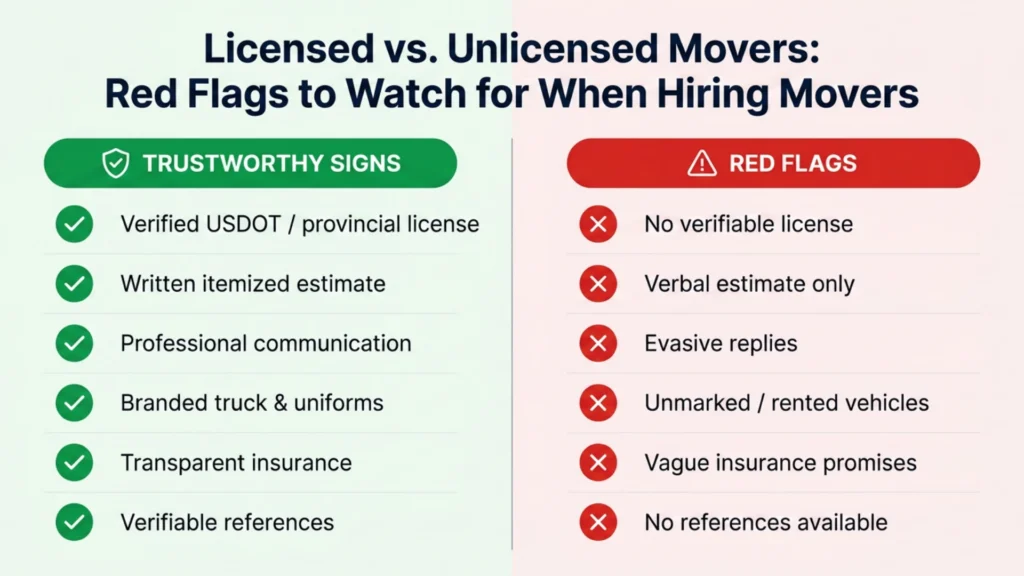
Lack of Proper Licensing and Insurance
Licensed movers are legally accountable and must meet strict standards for safety and transparency.
If a company can’t provide a valid USDOT number, Canadian provincial license, or proof of registration, this is a deal-breaker.
Picture this: an uninsured operator damages your items and then disappears. You’re left with no recourse and zero coverage.
How to verify credentials in seconds:
- Ask for their mover license number and check it online
- Confirm with provincial or federal registries (in Canada, check provincial authority databases)
- Request a copy of their insurance certificate—look for coverage on household goods during transit
If details are missing or the company stalls, move on. “A legitimate business is never offended by questions about licensing or insurance.”
—
Vague, Verbal, or Missing Estimates
A quick phone quote—without seeing your belongings—is a top warning sign.
Solid estimates should be written, itemized, and include a full inventory of your items, plus a clear price breakdown.
Red flags pop up when:
- Estimates are only verbal, never in writing
- Contracts are incomplete or missing key details
- You’re asked to sign a “blank” or rushed contract
Real scenario: customers report movers doubling their price after loading because there’s no written record to fall back on.
—
Suspicious Payment Practices
Reputable companies rarely require large upfront deposits or cash-only deals.
Expect a small deposit, if any. The rest should be paid only after your belongings arrive.
A few payment pitfalls to avoid:
- Requests for full payment before your move date
- Cash-only terms or “discount for no receipt” offers
- Unclear or untraceable payment methods
If you pay upfront, you risk load hostage schemes and vanishing movers. Always use secure, trackable payment options.
—
Unprofessional Business Practices and Poor Communication
Look for the hallmarks of a real business. Generic names, vague voicemails, or no physical address? That’s a red flag.
Spot these unprofessional signals:
- Trucks without branding, or rental vehicles with no company logo
- No official website, or “contact us” forms that go unanswered
- Slow, pushy, or cagey responses—especially when you ask about details
If you’re rushed to sign contracts or pressured into decisions, trust your instincts and walk away.
Every trustworthy moving company welcomes your questions and provides clear, consistent information from day one.
—
Carefully watching for these warning signs—licensing issues, unclear estimates, payment demands, and shifty communication—means you protect your belongings, avoid scams, and enjoy a move that’s as stress-free as possible.
Patterns of Inconsistent or Negative Customer Experiences
Reading and Interpreting Review Patterns
Online reviews and complaints are your early warning system when choosing movers. A single bad comment may just be coincidence, but recurring patterns reveal risk.
Look for repeat mentions of:
- Unexplained or hidden fees
- Damaged or missing items
- Delays or missed delivery windows
- Unexpected “hostage load” situations (goods withheld for extra payment)
If you see the same problems pop up again and again, it’s time to pause. A legitimate company will consistently address feedback, while a scammer disappears—or attacks reviewers.
Pro tip: “Three or more similar complaints across platforms almost never lies.”
Company Responses and Accountability
Pay close attention to how movers respond to negative feedback on Google, Facebook, or the Better Business Bureau. Authentic companies:
- Offer apologies, solutions, or refunds
- Explain misunderstandings politely
- Provide clear contact details for follow-up
Scammers, on the other hand, are evasive, combative, or simply ignore complaints. No response or aggressive replies = another big red flag.
Trusted Research Tools
Before you choose, do your due diligence. Here are the best resources:
- Better Business Bureau (BBB): Complaint records and company grades
- Provincial registries & USDOT (in Canada/USA): Licensing status
- Social media: Real-time posts and photos from recent customers
These quick searches often reveal hidden trends long before you commit.
Deceptive Insurance Claims
“Everything is covered” often translates to minimal protection in the fine print. Most movers’ standard liability is just $0.60 per pound per item in Canada—a fraction of real replacement value.
Red flags in insurance promises:
- Claims of “free full-value protection” without proper documentation
- Contracts hiding coverage exclusions or deductibles
- Missing written policy limits or confusing terminology
Tip: Always ask to see the Certificate of Insurance and verify actual coverage amounts.
Visual Cues for Sharing and Action
Picture this: You open your phone, check recent reviews, and spot three people—this month—complaining their delivery was delayed for “extra fees” at the last second. That’s a pattern you can’t afford to ignore.
When researching movers, trust consistency over outlier stories. If communication is slow or reviews raise the same issues, walk away early. This single step could save you thousands in surprise costs and weeks of stress.
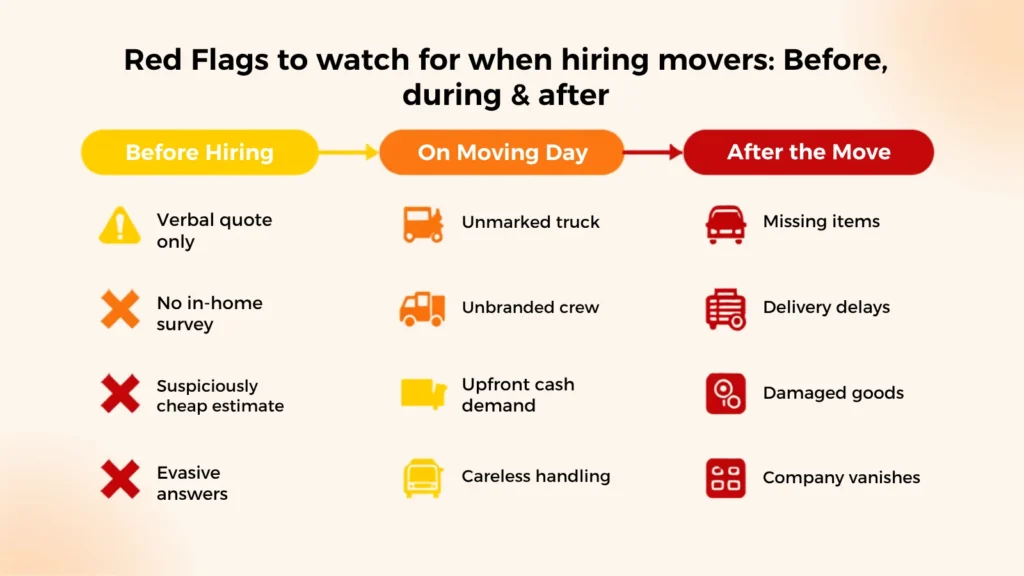
Situational Red Flags Before, During, and After Your Move
Before Hiring: Early Warning Signs
Picture this: You request a moving quote and receive an estimate instantly, all without a video call or anyone seeing your belongings. That’s a classic red flag—reliable movers always do an on-site or virtual survey before quoting.
Be wary if the company:
- Avoids direct questions about licensing, insurance, or their business address
- Pressures you to sign a contract without sending full details in advance
- Offers a quote that’s significantly lower than other local movers
- Only gives vague, verbal estimates with unclear terms
Even a single “too good to be true” low estimate or rushed paperwork can signal major problems ahead.
“A missing survey or lowball estimate is often the first sign of a risky move.”
On Moving Day: Red Flags in Action
The big day arrives, but instead of a branded truck, an unmarked van parks outside your home. The crew lacks uniforms, and no one offers identification.
Watch for:
- Movers arriving late, unbranded, or in rented vehicles
- Crews with no company ID or uniforms
- Staff behaving in a rushed, careless, or pushy manner
- Requests for payment before loading begins—especially cash-only demands
If movers start asking for extra fees before lifting a single box, that’s a sign you might be facing a “hostage load” scam or unreliable service.
“If the truck is unmarked and payment is demanded upfront, hit pause. Your move is at risk.”
After the Move: Post-Delivery Surprises
Your possessions arrive—but some are missing, damaged, or delivery is mysteriously delayed. Even worse, the movers threaten to hold your items until you pay new, unexpected charges.
Post-move red flags include:
- Unexplained delivery delays or demands for more money
- Damaged or missing items with no upfront resolution offered
- The company disappears after delivery, making claims or follow-up impossible
To protect yourself, meticulously document all issues:
- Take photos of damages immediately
- Save all digital and written correspondence
- Report issues promptly to consumer protection agencies and review sites
“If your movers vanish after delivery, or you’re asked for a ransom payment, act quickly and report it.”
Staying alert to these situational red flags—before, during, and after your move—empowers you to avoid costly surprises. Trust your instincts and choose transparency at every step for a truly stress-free move.
Your Pre-Move Red Flags Checklist
Picture this: You’re ready to book a mover, but something feels “off.” Use this essential pre-move checklist to cut through the noise and protect your peace of mind—one red flag at a time.
Visual Checklist for Evaluating Movers
Before you sign, scan for these critical warning signs:
- No in-home or virtual survey before providing a quote
- No written estimate or contract—just a verbal or “handshake” deal
- Demands for a large deposit (over 20%) or asks for cash-only payments
- Refuses to show license, insurance, or USDOT/registration details
- No website, business address, or answers phone with a generic greeting like “Movers”
- Pushes for a rushed signature, blank forms, or won’t explain fine print
Modern scam attempts are subtle. A moving company that’s reluctant to answer questions, provide documentation, or verify their business—don’t ignore that sixth sense.
Essential Criteria: The Must-Have List
Make your comparison process simple and transparent by always asking for:
- Written survey (on-site or virtual) of your belongings
- Detailed, itemized quote with clear pricing and listed services
- Proof of licensing and insurance relevant to your province or country
- Professional communication and branded materials: website, logo, uniform, truck
- Consistent, above-average online reviews with positive resolution of any complaints
“If the estimate seems too good to be true, it probably is.” Use this as your north star—and never skip steps just to save time.
Step-by-Step: How to Screen Movers Efficiently
- Shortlist 2-3 reputable companies based on reviews and referrals
- Request and compare written estimates—not just ballpark numbers
- Validate licensing, insurance, and business credentials
- Check review patterns for recurring complaints like hidden fees or hostage loads
- Trust your instincts if a mover pressures you or gets defensive
- Choose the company that checks all boxes, not just the cheapest option
Empower Your Move with Confidence
A pre-move checklist turns stressful guesswork into smooth, confident action. When you know exactly what to look for, you’re far less likely to fall for empty promises or scams.
When in doubt, pause and re-check the basics—your time, money, and belongings deserve that level of care.
What to Do If You Spot Red Flags
Spotting red flags early can save you from hidden fees, lost items, and endless stress.
If something feels off—like a mover asking for a cash-only deposit or pressuring you to rush through paperwork—pause immediately.
Trusting your instincts is more than cliché; it’s one of your best tools for a smooth move.
Immediate Steps to Protect Yourself
When you notice a warning sign, act fast:
- Stop all communication with the moving company if you sense aggressive pressure or evasive answers.
- Don’t share personal or payment details unless the company has verified licensing and insurance.
- Never sign blank, rushed, or unclear documents—insist on a written, itemized estimate.
“Spot a red flag? Step back immediately—nothing is worth risking your move or your money.”
How and Where to Report Suspicions
Help protect others by reporting suspicious movers:
- Contact your provincial consumer protection agency (in Canada) or state authority.
- File a complaint with the Better Business Bureau (BBB) and check for other alerts there.
- Visit the Canadian Association of Movers or a government registry to confirm details and report scams.
- Post a warning review online to flag patterns for future customers.
Walking Away Safely and Professionally
If you decide to walk away, do it smoothly:
- Politely decline further contact and remove any shared information from digital portals or forms.
- Document your interactions with dates and details—this could be crucial if you need to file a report.
- Don’t be afraid to ask direct questions until you feel 100% comfortable.
“Walking away from a bad deal doesn’t cost you money—ignoring red flags might.”
Your Role: Stay Proactive and Empowered
Smart movers know: The best question is the one you ask before signing.
Always:
- Trust your gut instincts and request clarity on every point.
- Compare reviews for patterns: Frequent complaints about hostage loads or upfront fees mean it’s time to look elsewhere.
Picture this: You catch a company asking for 50% up front, with no clear address or branded truck. You save yourself thousands and hours of regret—just by walking away.
Staying aware, asking questions, and reporting red flags protects not just your move, but helps build a safer experience for the entire community.
Protect Your Move: Final Red Flags to Watch for When Hiring Movers
Choosing the right mover is about protecting your time, belongings, and peace of mind—not just finding a low price. By staying alert to classic warning signs, you turn stress and uncertainty into a smoother, smarter experience.
Your awareness is your strongest shield as you navigate the moving industry. When you know which signals to trust, you reclaim control and safeguard your move from hidden risks.
—
Here are your most critical red-flag strategies:
- Insist on written surveys and itemized estimates—never settle for a verbal or “handshake” deal
- Verify every detail: licensing, insurance, online reviews, and clear business credentials
- Watch for patterns in customer complaints, especially around surprise fees or hostage loads
- Refuse any pressure for large, upfront deposits, blank contracts, or cash-only payments
- Trust your instincts: vague answers or pushy tactics are always a signal to pause
—
Before committing, take these next steps:
- Shortlist two or three moving companies based on verified credentials and review patterns
- Schedule on-site or virtual surveys to get accurate, itemized estimates
- Check every contract closely—don’t sign until all terms are transparent
- Walk away from anything that feels “off”—your future self will thank you
- Share warning signs with friends and online communities to help others move safely
—
Choosing a mover isn’t just a transaction—it’s a leap toward a new chapter. By demanding clarity and trusting your instincts, you build confidence for every step ahead. The power to protect your move is in your hands—move smart, move easy, and let every decision be a step towards a truly stress-free relocation.
“Red flags aren’t just warnings—they’re your permission to move forward on your own terms.”
FAQ
1. What are the most critical red flags to watch for when hiring movers?
The most critical red flags to watch for when hiring movers include lack of written estimates, demands for large upfront deposits, inability to verify licensing or insurance, unmarked trucks, and evasive communication. These warning signs often precede hidden fees, damaged belongings, or scam tactics that put your move at serious risk.
2. Why is a written estimate so important when spotting red flags to watch for when hiring movers?
A written, itemized estimate protects you by creating a documented agreement about costs. Red flags to watch for when hiring movers often involve verbal quotes only—which allow companies to double prices after loading. Written estimates prevent disputes, hold movers accountable, and ensure transparency every step of the way.
3. How can I verify licensing to avoid red flags to watch for when hiring movers?
Always ask for the mover’s USDOT number (USA) or provincial license (Canada) and verify it directly through official registries before booking. Red flags to watch for when hiring movers include refusal to provide credentials, vague answers, or licenses that don’t verify online—these are immediate deal-breakers signaling unaccountable operators.
4. What payment practices signal red flags to watch for when hiring movers?
Red flags to watch for when hiring movers involving payment include cash-only demands, requests for full payment before moving day, large deposits (over 20%), or untraceable payment methods. Legitimate movers accept secure payments and require only a small deposit—the rest due after safe delivery of your belongings.
5. How do online reviews help identify red flags to watch for when hiring movers?
Online reviews reveal patterns that signal red flags to watch for when hiring movers. Look for repeated complaints about hidden fees, damaged items, delays, or “hostage load” situations. Three or more similar complaints across platforms are almost never coincidence—they’re red flags to watch for when hiring movers that demand you walk away.